General Notes
Monday, April 3, 2023
what is critical thinking, what is a critical thinker, why do you need a guide to think critically?
My answers
critical thinking is consciously thinking about a problem, maybe from all angles?
you can think analytically, creatively, strategically, etc. etc.
Analytical
- analytically
- we take the whole that we are examining and attempt to identify its components.
Next step
examine each component individually and understand how it fits within the other components.
- Example
- we are currently examining the meaning of each of the words in the term critical thinking so we can have a better understanding of what they mean together as a whole
Creative
we are not focused on relationships between parts and their wholes, as we are when we think analytically.
- Example
- Suppose you are cooking, and you do not have all the ingredients called for in your recipe. If you do a creative, you look for things in you fridge and pantry that you can substitute for the missing ingredients. However, in order to do this, you must let go of the recipe's expected outcome and conceive of a new direction.
1.3
What is Logic?
maybe the study of the methods and principles of good reasoning? I'm not quite sure tbh implying that there are certain principles at work in good reasoning
these principles and methods are not a matter of opinion. (very cocky!)
but what is "Good Reasoning?"
Logic definition for the purposes of this book
Logic - is the study of arguments that serve as tools for arriving at warranted judgments.
this definition of logic does not explain that there are principles at work in good reasoning or that these principles are not necessarily informed by experience: The meaning of the word argument in logic does the job.
Argument - has a very technical meaning in logic. -- refer to argument as a methodical defense of a position.
Warranted Judgements. for our purposes, judgment refers simply to an informed evaluation. it is by means of judgment that we furnish our world of beliefs.
Warrant -
-
What about the word warrant? Why are warranted judgments preferable to unwarranted ones? What is a warrant? If you are familiar with the criminal justice system or television crime dramas, you may know that a warrant is an authoritative document that permits the search and seizure of potential evidence or the arrest of a person believed to have committed a crime. Without a warrant, such search and seizure, as well as coercing an individual to submit to interrogation or imprisonment, is a violation of the protections and rights that individuals in free societies enjoy. The warrant certifies that the search or arrest of a person is justified—that there is sufficient reason or evidence to show that the search or arrest does not unduly violate the person’s rights. More generally, we say that an action is warranted if it is based on adequate reason or evidence.
-
our judgments are warranted when there is adequate reason or evidence for making them
More or less, your judgments are warranted when there is evidence that they are actually true. Without sufficient evidence, its a supposition or something not as good. FRFR
In his Summa Theologica, Thomas Aquinas advanced the idea that belief in the existence of God can be grounded in logical argument.
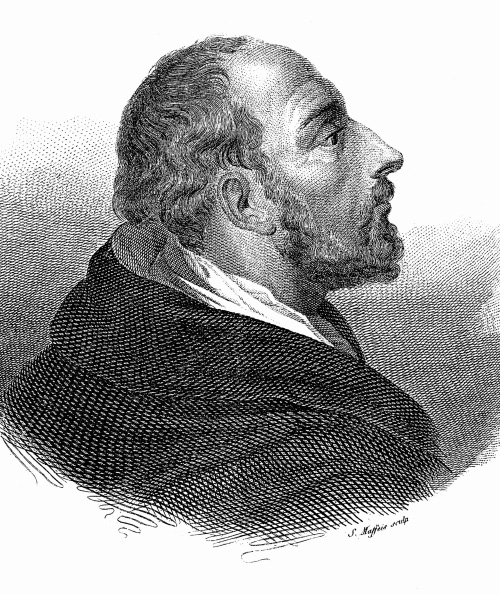
[[A Closer Look: Warrants for the Belief in God]]
Formal vs Informal Logic
Our focus here will be how logic contributes to the development and honing of critical thinking in everyday life.
The principal aim in informal logic is to examine the reasoning we employ in the ordinary and everyday claims we make
Formal logic is far more abstract, often involving the use of symbols and mathematics to analyze arguments.
1.4 - Arguments Outside of Logic
argument often means an exchange of diverging views, sometimes in a heated angry or hostile setting.
in logic, an argument doesn't refer to a fight, or an angry dispute. It also doesn't necessarily have to be an exchange between two people, or be emotional at all.
An argument in "logic" is typically advanced by only one person, on their own behalf, or that of a "group"
in logic, your typical argument may be considered a debate.
[[Moral of the Story]]
Rhetorical Arguments
the art of persuasion.
The word rhetoric
rhetoric uses the word argument almost as much as logic does.
from the point of view of rhetoric, an argument is an attempt to persuade -- to change someone's opinion or behaviour.
Whereas rhetorical arguments aim to persuade (often with the intent to manipulate), logical arguments aim to demonstrate.
the distinction between persuading and demonstrating is crucial.
[[Moral of the Story#moral-of-the-story-persuasion-versus-demonstration]]
[[school.informal-logic.book-excerpts#revisiting-arguments-in-logic]]
the goal of an argument in logic is to demonstrate that a position is likely to be true.
Practice questions
How is the word "argument" defined in logic?
Many people think an argument is a heated verbal exchange between two or more people. However, in logic, the word “argument” has a specialized definition. An argument is a list of premises (the reasons) that support a conclusion. In fact, in logic and critical thinking, arguments should be presented outside of the anger that is usually thought of in the typical definition.
- demonstrate that a position is likely to be true
How would you explain the difference between logical argumentation and rhetorical argumentation?
Rhetorical arguments attempt to persuade people to believe something. Logical arguments attempt to convince others that the conclusions are the best positions on issues. While rhetorical arguments often appeal to strong emotions to persuade the audience, logical arguments rely on the presentation of evidence and proper reasoning to support the conclusion on the issue. The goal in a logical argument is not necessarily to persuade.
1.5 Importance of Language in Logic
the different uses and meanings of the word argument shows the importance of employing language precisely.
back to a bunch of gibberish from my communication class.
Language and how words and punctuation are used are very important.
ie:
Let’s eat Grandma. Let’s eat, Grandma. Commas save lives.
2.1 Arguments in Logic
chappie 1 provisionally defined argument as a methodical defense of a position.
that is the "Commonsense" understanding of the way the word argument is employed in logic.
In chappie 1, we also learned the commonsense understanding of argument vs the logic understanding. basically commonsense arguments do not necessarily involve a dialogue and therefore do not involve an exchange. Generally, in ordinary use, arguments are characterized by verbal disputes between two or more people, and often contain emotional outbursts.
In logic, an argument is a set of claims in which some, called the premises, serve as support for another claim, called the conclusion. The conclusion is the argument's main claim. For the most part, this (above) technical definition of argument is what we shall employ in the remainder of this book.
| Meaning in ordinary use | Commonsense meaning | Technical meaning in logic |
|---|---|---|
| A verbal quarrel or disagreement, often characterized by raised voices and flaring emotions. | The methodical and well-researched defense of a position or point of view advanced in relation to a disputed issue. | A set of claims in which some, called premises, serve as support for another claim, called the conclusion. |
Arguments in the technical sense are a primary way in which we can defend a position.
[[school.informal-logic.book-excerpts#arguments-in-logic]]
To understand the more technical definition of an argument as a set of premises that support a conclusion, consider the following presentation of the reasoning from the commonsense argument we have just examined.
Good performance in math is not due to genetics.
Good performance in math only requires preparation and continuous practice.
Students who do well initially assume they have natural talent and practice more.
Students who do less well initially assume they do not have natural talent and practice less.
Therefore, believing that one’s math ability cannot change becomes a self-fulfilling prophecy.
Claims
a Claim is an assertion that something is or is not the case.
claims take the form of declarative sentences. More importantly, each premise or conclusion consists of one single claim. In other words, each premise or conclusion consists of one single declarative sentence.
claims can be either true or false.
We often intend to advance claims in ways that do not present our claims clearly and properly—for example, by means of rhetorical questions, vague expressions of affection, and commands or metaphors that demand interpretation. But it is important to recognize that intention is not sufficient when communicating with others.
Claims are sometimes called propositions. We will use the terms claims and propositions interchangeably in this book.
The Standard Argument Form
In informal logic the main method for identifying, constructing, or examining arguments is to extract what we hear or read as arguments and put this in what is known as the standard argument form.
It consists of claims, some of which are called premises and one of which is called the conclusion.
In SAF, (from now on, will try to reference Standard Argument Form as SAF) premises are listed first, each on a separate line, with the conclusion on the line after the last premise.
We will generally use the following method, prefacing the conclusion with the word therefore:
Premise Premise Therefore, Conclusion
The amount of premises can be as few as one and as many as needed.
That said, either approach (to the extreme, ie one premises or 50) carefully. One premises can offer only very limited support for the conclusion, and on the other hand, many premises risk error or confusion.
In SAF, each premise or conclusion should be only one sentence long, and premises and conclusions should be stated as clearly and briefly as possible.
But, avoid premises or conclusions that have multiple sentences or single sentences with multiple claims.
Example of what not to do
I live in Boston, and I like clam chowder. My family also lives in Boston. They also like clam chowder. My friends live in Boston. They all like clam chowder, too. Therefore, everyone I know in Boston likes clam chowder.
If you want to make more than one claim about the same subject, then you can break your declarative sentences into several sentences that each contain only one claim. The previous example can be rewritten as follows.
Example of what to do
I live in Boston.
I like clam chowder.
My family lives in Boston.
My family likes clam chowder.
My friends live in Boston.
My friends like clam chowder.
Therefore, everyone I know in Boston likes clam chowder.
The relationship between premises and the conclusion is that of inference—the process of drawing a claim (the conclusion) from the reasons offered in the premises.
inference: the process of drawing a claim (the conclusion) from the reasons offered in the premises.
2.2 Putting Arguments in the Standard Form
Presenting arguments in SAF is crucial because it provides us with a dispassionate method that will allow us to find out whether the argument is good, regardless of how we feel about the subject matter.
The first step is to Identify the fundamental argument being presented.
Punctuation, parentheses, and conclusion indicators all serve as signposts to assist us when deconstructing an argument. They provide important clues about where to find the conclusion as well as supporting claims.
Language is not only a means for expressing ideas; it also offers a road map for the ideas presented.
Chappie 1 underscored the fundamental importance of clear, precise, and correct language in logical reasoning.
Parentheses tell us that we are being given relevant information, but only as an aside or afterthought to the main point; if removed the parenthetical information would not alter the main point.
The word therefore indicates that the sentence is a conclusion.
The word therefore is the "standard" conclusion indicator we wiill use when constructing arguments in the SAF. However, there are other conclusion indicators that are used in ordinary arguments, including:
Conclusion Indicators
- Consequently . . .
- So . . .
- Hence . . .
- Thus . . .
- Wherefore . . .
- As a result . . .
- It follows that . . .
- For these reasons . . .
- We may conclude that . . .
Find the Premises Next
After identifying the conclusion, the next thing to do is look for the reasons the author offers in defense of his or her position. or Premesis.
similar to conclusion indicators, you have Premise Indicators that serve as signposts that reasons are being offered for the main claim or conclusion.
Premise Indicator Examples
- Since . . .
- For . . .
- Given that . . .
- Because . . .
- As . . .
- Owing to . . .
- Seeing that . . .
- May be inferred from . . .
Paraphrasing stuff below in the link.
[[Everyday Logic#modesty-and-charity]]
because is an example of a logical indicator word. indicates the word following is a reason to believe the claim before.
what you need to know
this is an excerpt from the learning activity for week one.
Intellectual modesty includes seeking to understand what others think and being willing to break old habits and embrace change.
Becoming a critical thinker demands an approach called intellectual modesty: (a) Be aware that we are bound to make mistakes and that we will benefit when we recognize them, (b) be willing to break old habits and embrace change, and, perhaps most importantly, © genuinely seek to know what others think.
Critical thinkers do not seek approval by trying to show that they are right. They do not assume that disagreement reflects a lack of intelligence or insight on the part of others.
For a more in-depth discussion of this topic see section 1.2.
This is another:
An argument, in logic, is a set of premises given in support of a conclusion.
Claims are declarative sentences. As such, they must be the kind of thing that is either true or false. Note claims aren't necessarily true but are presented as true. If a sentence cannot be regarded as true or false, such as a question, an exclamation, or a command, it does not make a claim. Arguments use claims as premises and conclusions. Each premise and conclusion should contain one and only one claim.
A fact is a thing that is known or proved to be true, for example, a piece of information used as evidence.
For a more in-depth discussion of this topic see section 2.1.
another one:
An argument attempts to show that a conclusion is true; an explanation attempts to show why it is true.
To determine whether a passage is an argument or an explanation, look at the central claim. Is it the author's intent to convince you that the claim is true or to tell you why it is true? The former is indicative of an argument, the latter of an explanation. The conclusion of an explanation is therefore already an accepted truth and is therefore likely to be less controversial than the premises.
For a more in-depth discussion of this topic see section 2.4.
Hopefully, the last one:
Logic deals in inference, or the process of arriving at the conclusion that would follow from the reasons offered in the premises. The broadest distinction in arguments is a distinction in inferences, that is, the relationship between the premises and the conclusion. The distinction between deductive and inductive arguments is ultimately a distinction in the strength of the connection between the premises and the conclusion.
In deductive arguments, the intent is for the conclusion to follow from the premises by necessity. That is, if we accept all of the premises, we must accept the conclusion as well.
By contrast, in an inductive argument, the intent is for the conclusion to be made more likely by the premises. If we accept that the premises are true, this gives us very good reason to accept the conclusion. Inductive reasoning, when successful, establishes the likelihood and therefore reasonableness of a conclusion.
For a more in-depth discussion of this topic see section 2.4.
3.1 Basic Concepts in Deductive Reasoning
there are two types of arguments, deductive and inductive. the difference between these types is mostly the strength of the connection between premises and conclusion.
inductive arguments are defined and discussed in [[chapter 5]]; this chapter focuses on deductive arguments.
Three Central Concecpts:
validity, soundness, and deduction.
Validity
Deductive arguments aim to achieve validity, which is an extremely strong connection between the premises and the conclusion.
In logic, the word valid is only applied to arguments; when validity is mentioned, its specifically referencing arguments not claims, points, or positions.
again, in logic, validity is a strict notion that has to do with the strength of the connection between an argument's premises and conclusion.
Recap on definitions?
an argument is a collection of sentences, on of which (the conclusion) is supposed to follow from the others (the premises).
A valid argument is one in which the truth of the premises absolutely gurantees the truth of the conclusion
in other words, it is an argument in which it is impossible for the premises to be true while the conclusion is false.
Notice!:
the definition of valid does not say anything about whether the premises are actually true, just whether the conclusion could be false if the premises were true.
Example
Everything made of cheese is tasty. The moon is made of cheese. Therefore, the moon is tasty.
if everything made of cheese were tasty, and if the moon were made of cheese, then the moon would have to be tasty.
The truth of that conclusion simply logically follows from the truth of the premises
If we assume, even hypothetically, that the premises are true (even in strange hypothetical scenarios), it logically follows that the conclusion must be as well. Therefore, the argument is valid.
Heres another, more realistic example:
All whales are mammals. All mammals breathe air. Therefore, all whales breathe air.
Here is an example of an invalid argument:
All whales are mammals. # All As are Bs No whales live on land. # No As are C Therefore, no mammals live on land. # Therefore,
Heres a trickier example of the same principle:
All whales are mammals. Some mammals live in the water. Therefore, some whales live in the water.
Tricky ass shit
Consider the following argument: "If it is raining, then the streets are wet. The streets are wet. Therefore, it is raining."
Is that bad boy valid? Could there be another reason why the road is wet?
“This one is trickier because both premises are true, and the conclusion is true as well, so many people may be tempted to call it valid. However, what is important is not whether the premises and conclusion are actually true but whether the premises guarantee that the conclusion is true. Think about making a movie: Could you make a movie that made this argument’s premises true and the conclusion false?”
Excerpt From With Good Reason: A Guide to Critical Thinking James Hardy, Christopher Foster, and Gloria Zúñiga y Postigo https://itunes.apple.com/WebObjects/MZStore.woa/wa/viewBook?id=0
[[school.informal-logic.week-2-instructor-guidance]]
Created: 2023-05-19